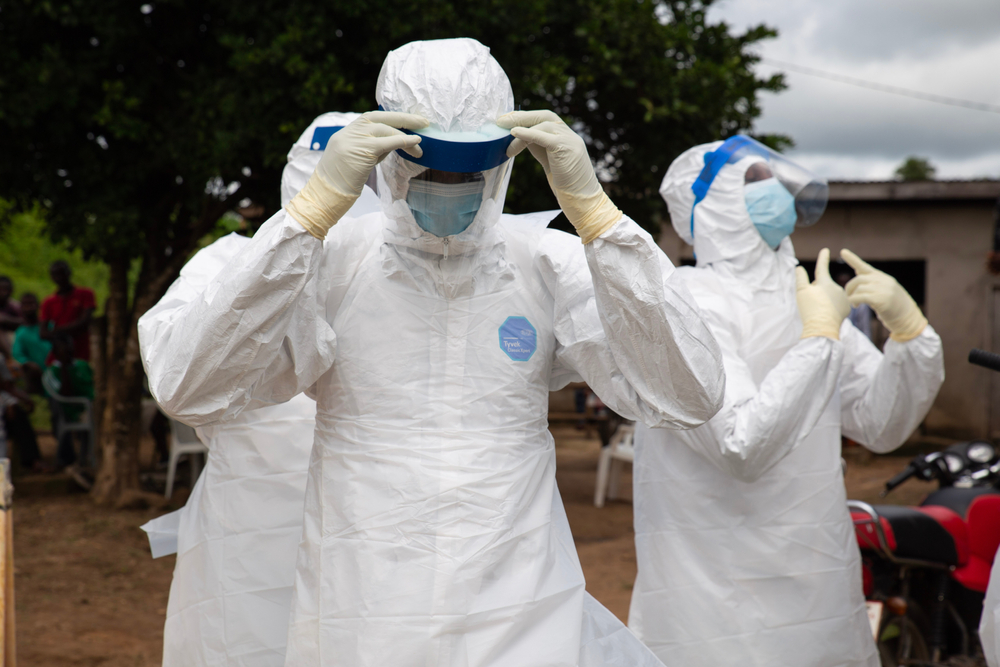
Hours Matter In A Fast-Moving Outbreak
In an Ebola outbreak, hours can determine whether health teams contain the virus or lose control of its spread. In the Democratic Republic of Congo, the latest epidemic is already moving faster than the response.
Global health officials and internal coordination documents show that authorities are weeks, if not months, behind in tracking exposed people and stopping transmission.
Bundibugyo Strain Raises The Stakes
The outbreak is caused by the Bundibugyo strain of Ebola, for which there is currently no approved vaccine or treatment.
According to the World Health Organization, the outbreak has caused a suspected 220 deaths and 900 cases. It has also spread to Uganda, where seven cases have been reported.
Thousands May Be Missing From Tracking
Health teams are racing to find thousands of people who may have been exposed to the virus.
Documents from a virtual coordination meeting led by the WHO and Africa Centres for Disease Control and Prevention show that, as of last week, only 7% of the 1,261 identified contacts of suspected Ebola patients had been found and followed up. By Wednesday, the WHO put the number of contacts at more than 2,000.
WHO Says The Outbreak Is Outpacing Response
WHO Director-General Tedros Adhanom Ghebreyesus said the outbreak is “outpacing the response”.
He warned that attacks on health facilities are making it nearly impossible to track cases and contacts, a core part of Ebola containment.
Health Facilities Under Attack
In eastern Congo, the worst-hit area, hospitals have been attacked and isolation tents have been burned by angry mobs seeking to reclaim the bodies of loved ones.
Health experts say these actions are severely disrupting efforts to isolate patients and identify contacts in a region already affected by conflict and weak health infrastructure.
Unsafe Burials Increase Risk
The handling of bodies remains one of the most sensitive issues in Ebola outbreaks. Corpses can be highly infectious, so safe burial protocols are essential to preventing further spread.
But mistrust and fear have led some families to reject official procedures. Similar dynamics helped drive transmission during previous Ebola outbreaks, including the devastating West Africa epidemic from 2014 to 2016.
Local Shortages Slow The Response
On the ground, response teams are facing shortages of basic supplies, emergency workers, vehicles, fuel and diagnostic tools.
Experts say Congo has deep experience fighting Ebola, with this being the country’s 17th outbreak since 1976. But the Bundibugyo strain requires specific testing capacity, and shortages may have delayed early detection.
Funding Cuts Leave Gaps
The global response is also being weakened by the United States’ withdrawal from the WHO and broader international aid cuts.
Several health sources said that in previous outbreaks, U.S. agencies worked closely with the WHO and often helped lead the international response. That support is now missing, leaving fewer organizations and personnel available to respond quickly.
Contact Tracing Becomes The Priority
Partners at Friday’s coordination meeting agreed that reaching more contacts is now the key priority as funding and emergency staff begin to arrive.
A WHO Africa presentation warned that no vaccine exists, no therapy exists, the virus circulated undetected for six weeks, cross-border spread has been confirmed and healthcare workers are dying.
Fear And Mistrust Create Another Barrier
Community mistrust is making the outbreak harder to control. Some suspected cases are disappearing, while others are not being reported.
Mamadou Kaba Barry, head of mission in Congo for the Alliance for International Medical Action, said people are afraid. He warned that fear of isolation, death and losing control over burial rituals can push people to hide illness rather than seek care.
A Race Against Time
Ebola spreads through direct contact with bodily fluids of symptomatic patients, contaminated materials and the bodies of those who have died from the disease.
Contacts must be found and monitored for 21 days, the virus’s incubation period. If symptoms appear, rapid isolation can stop further spread. Without enough staff, trust and resources, each missed contact gives the outbreak more room to grow.