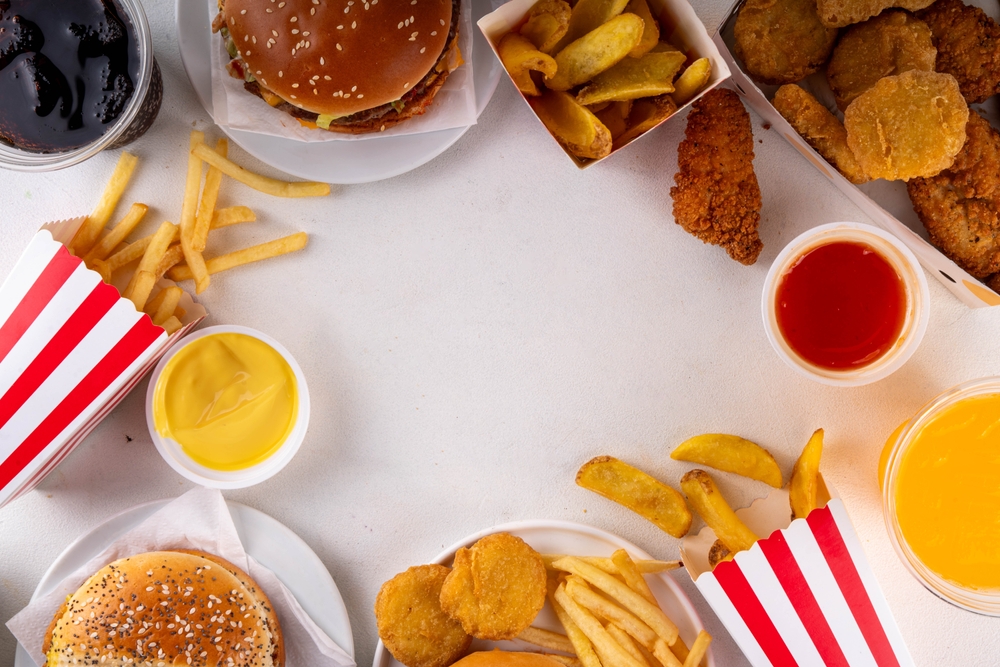
The strongest clinical trials on ultraprocessed foods provide only limited evidence that processing itself causes harm, according to a new analysis of five randomized controlled trials.
The researchers argue that many of the negative effects associated with these foods may be explained by familiar nutritional characteristics, including high calorie density, soft texture, excess sodium and saturated fat, and low levels of fiber and protein.
Researchers reassess five clinical trials
The commentary, published online in Science, examined trials conducted in the United States, the United Kingdom, Denmark and Japan.
All five used crossover designs, meaning participants followed more than one diet during different stages of the study. In three trials, people were allowed to eat freely until comfortably full. The other two provided fixed calorie amounts.
Four of the studies lasted between one and three weeks for each diet period, while the longest continued for eight weeks.
Trials did not isolate ultraprocessing
Faidon Magkos, professor of obesity and metabolism at the University of Copenhagen and a co-author of the commentary, said the studies most often cited in public debate were not designed to separate the effects of processing from established nutritional risk factors.
According to Magkos, differences in energy density, texture, fiber, salt and saturated fat can account for the changes observed in calorie intake, body weight and metabolic markers.
The apparent UPF effect often disappeared
The analysis found that the link between ultraprocessed diets and poorer outcomes weakened once traditional nutritional variables were considered.
In unrestricted eating trials, weight gain closely followed differences in calorie density and food texture. Softer foods were generally eaten more quickly and in larger amounts.
Increases in cholesterol were also associated with higher saturated fat content rather than with processing alone.
Matched diets produced fewer differences
When researchers matched the diets for sodium and fiber, the apparent calorie-independent effects of ultraprocessed foods disappeared.
Magkos said this finding argues against the idea that ultraprocessing creates a unique metabolic effect separate from the food’s nutritional composition.
Category includes very different foods
The ultraprocessed label captures many products that are high in calories, salt, sugar or unhealthy fats.
However, it can also include foods with reasonable or even beneficial nutritional profiles. This broad classification may make it difficult to determine whether processing level alone predicts health outcomes.
The trials did not show consistent harmful effects on blood glucose, insulin, triglycerides, blood pressure or insulin resistance.
Better trials would be difficult to design
To test whether industrial processing itself causes harm, researchers would need to change specific manufacturing characteristics while keeping the nutritional content of the foods identical.
This could involve comparing foods with different levels of fractionation, extrusion or emulsifier use while matching their calories, protein, fiber, fat and sodium.
Magkos acknowledged that conducting such tightly controlled studies would be challenging.
Critics point to the wider food system
Luc Hagenaars of Amsterdam University Medical Center agreed that the trials have important limitations, but argued that the analysis does not address a broader question: why food supplies in Western countries have become increasingly unhealthy.
He said ultraprocessing techniques have allowed manufacturers to combine inexpensive ingredients such as sugar and refined carbohydrates into products with long shelf lives and low production costs.
Removing fiber and using other industrial methods may improve profitability while reducing nutritional quality.
Foods can be engineered to encourage overeating
Hagenaars also emphasized the role of taste, texture and product design.
Manufacturers can formulate foods to reach a highly appealing balance of sweetness, saltiness and fat, sometimes described as a bliss point. Flavorings and soft textures can make these products easier and faster to consume.
From this perspective, the problem is not simply the biological effect of processing, but the economic incentive to sell calorie-dense foods that encourage repeated consumption.
Mass marketing shapes what people eat
Hagenaars said the commentary’s conclusions may be scientifically reasonable while still overlooking why the food industry invests so heavily in products with poor nutritional profiles.
Highly processed foods are often easier to package, distribute, advertise and sell at scale than fresh products. As he put it, broccoli is difficult to mass market.
Advice should focus on food quality
Magkos said clinicians should place greater emphasis on nutritional quality and eating behaviour rather than telling patients to avoid every food classified as ultraprocessed.
He recommended prioritizing foods that are higher in fiber and lower in calorie density, while limiting soft products that can be consumed very quickly.
These characteristics are more directly connected with energy intake, weight change and cardiovascular risk factors than the processing label alone.
The food environment remains a challenge
Hagenaars advised people not to keep large quantities of foods that are especially easy to overeat.
He also acknowledged that this is difficult when stores, workplaces and public spaces are filled with precisely those products.
Doctors and health institutions, he suggested, can support changes to local food environments in hospitals, schools and cities rather than placing the entire burden on individual consumers.
Price, taste and convenience drive choices
Seamus Higgins, associate professor of food process engineering at the University of Nottingham, said scientific classifications often fail to reflect how consumers actually choose food.
People are generally guided by price, taste and convenience. These preferences interact with biological instincts shaped during long periods when food was scarce.
The modern food system has become highly effective at satisfying those instincts, which may explain eating patterns more clearly than the ultraprocessed label by itself.
The debate is far from settled
The analysis does not suggest that diets dominated by packaged, calorie-dense foods are healthy.
Instead, it questions whether all foods placed in the ultraprocessed category share a unique harmful property simply because of how they are manufactured.
The available randomized trials indicate that calorie density, texture, fiber, protein, sodium and saturated fat remain the more convincing explanations for changes in appetite, weight and metabolic health.