Military units deployed as thousands attempt crossings
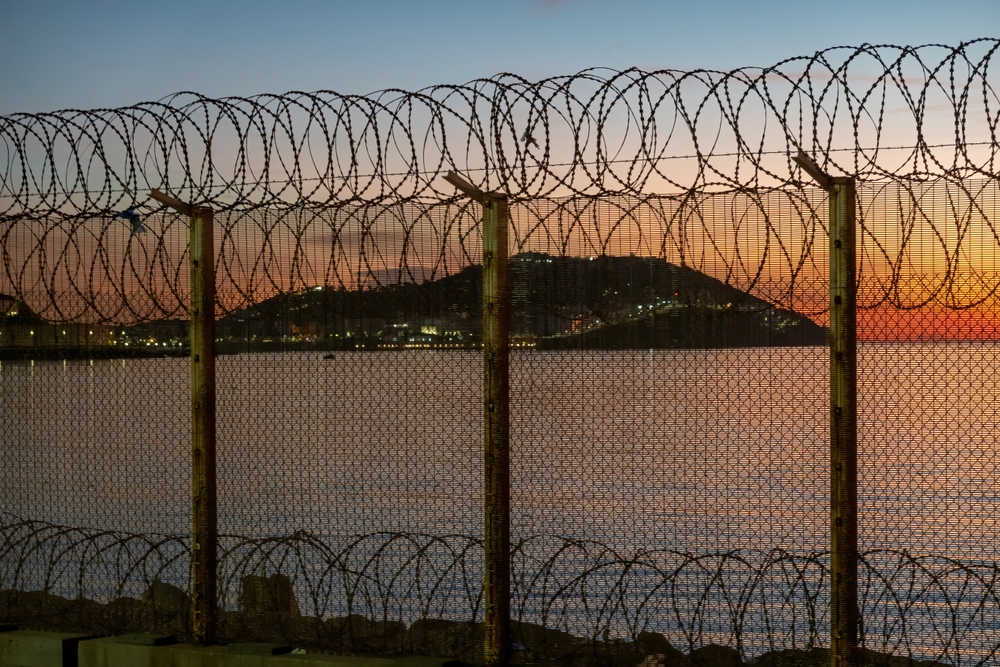
Spain deployed military personnel to reinforce police forces in the North African enclave of Ceuta on Thursday after a large surge of migrants attempted to enter the territory from Morocco by sea and land.
Spanish state television reported that between 2,000 and 3,000 people had crossed into Ceuta, although the figure could not be independently confirmed. Videos showed hundreds of migrants swimming across the border area using inflatable tubes, while others broke through a land barrier and entered the city.
Moroccan and Spanish authorities respond to crossings
Moroccan authorities used water cannons near the town of Fnideq, close to the Ceuta border, in an effort to prevent migrants from crossing into Spanish territory.
Some migrants who reached Ceuta described the journey as difficult but said their determination helped them cross. Several people were seen entering through border gates as security forces attempted to manage the situation.
Spain sent 200 specialised police officers and 60 military personnel from mainland Spain to support local authorities in Ceuta. Officials had not immediately confirmed whether additional forces would be sent to Melilla, Spain’s other autonomous city in North Africa.
Violence reported near Melilla border
Authorities also reported tensions in Melilla, where clashes were reported at the Beni Ansar border crossing between Morocco and the Spanish enclave.
According to the Moroccan Association for Human Rights, vehicles were set on fire and injuries were reported among migrants and security forces. Morocco’s Interior Ministry did not immediately comment on the situation.
Deaths reported as migration pressure increases
Local authorities in Ceuta said nine bodies were recovered on Thursday, adding to dozens of migrant deaths recorded during attempted crossings into the enclave in recent months.
The latest arrivals brought renewed attention to the migration pressures faced by Ceuta and Melilla, which are the European Union’s only land borders with Africa.
The situation was compared with 2021, when around 10,000 migrants, including many minors, entered Ceuta from Morocco in one of the largest migration surges experienced by the territory.
Ceuta businesses close amid security concerns
Several businesses in Ceuta closed temporarily as tensions increased. Local business owners said they were concerned about security and believed police resources could be overwhelmed.
Enrique Serrano, a local shop owner, said many businesses were prioritising protecting their employees, families and properties as migrants entered the city in large numbers.
Political debate grows over migration policy
The migration surge has intensified political debate in Spain, with opposition parties criticizing the government’s migration approach.
Spain’s Socialist government has recently introduced a programme aimed at granting legal status to hundreds of thousands of undocumented migrants. Critics argue the policy could encourage further arrivals, while government officials reject that explanation.
People’s Party leader Alberto Núñez Feijóo called the situation a national security crisis and urged the government to take immediate action.
Ceuta Mayor Juan Jesús Vivas also requested that the national government declare an emergency due to the scale of arrivals.
Supreme Court ruling linked to migration increase
The Spanish government said the recent increase in arrivals was connected to the actions of human trafficking networks following a Supreme Court ruling that limited the immediate return of migrants intercepted at sea attempting to reach Ceuta and Melilla.
The Interior Ministry said it was working with Moroccan authorities to manage irregular migration and prevent further crossings.
Human rights organisations said those arriving included Moroccan and sub-Saharan migrants, including families seeking entry into Spanish territory.