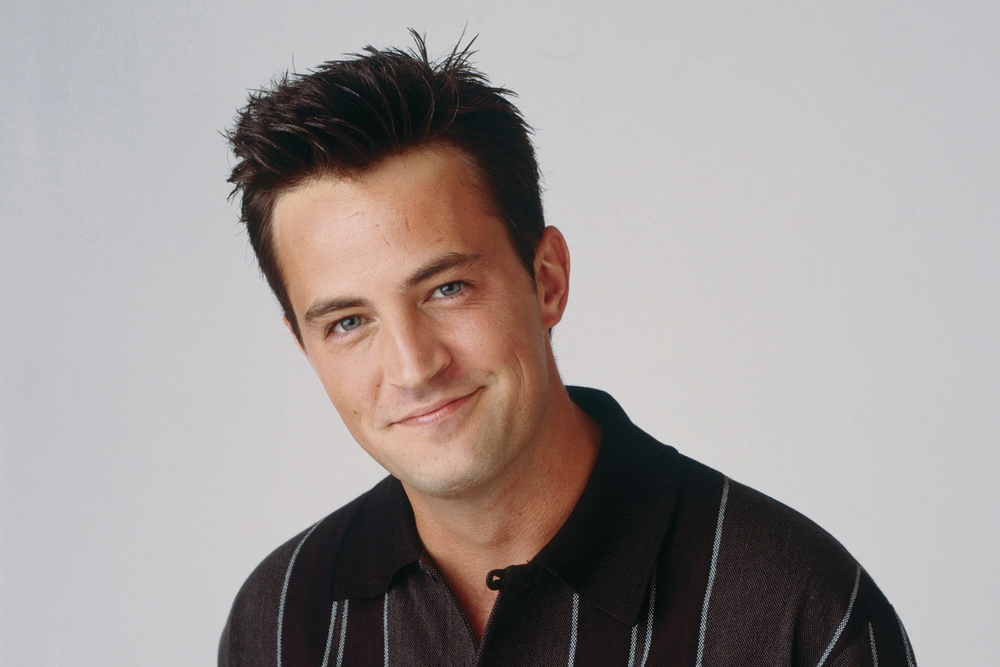
The death of Matthew Perry continues to have major legal consequences nearly three years later. On Wednesday, a federal court in Los Angeles sentenced Perry’s live-in assistant, Kenneth Iwamasa, to 41 months in prison for his role in supplying the ketamine that caused the actor’s death in 2023. The sentencing marks another major development in the high-profile investigation into the network of people accused of exploiting Perry’s addiction.
The Trusted Assistant at the Center of the Case
Kenneth Iwamasa, 60, served as Perry’s personal assistant and constant companion during the actor’s final years. Prosecutors said he worked with two doctors to obtain more than $50,000 worth of ketamine for Perry in the weeks leading up to his death.
Despite having no medical training, Iwamasa admitted to repeatedly injecting the actor with the drug, including multiple injections on the day Perry died. The Friends star was found dead in the hot tub of his Los Angeles home in October 2023.
In August 2024, Iwamasa pleaded guilty to one count of conspiracy to distribute ketamine causing death, a charge carrying a maximum sentence of 15 years in federal prison.
In addition to the 41-month prison term, he was sentenced to two years of supervised release and ordered to pay a $10,000 fine. He is expected to report to prison on July 17.
Judge Condemns “Reckless” Conduct
During sentencing, Judge Sherilyn Peace Garnett emphasized that Iwamasa was fully aware of Perry’s history with addiction yet continued to provide and administer ketamine.
“You were privy to his trouble with addiction,” Judge Garnett told him. “You knew he should not have used ketamine at the amount he did.”
The judge also criticized Iwamasa for attempting to conceal evidence after Perry’s death and for lying to investigators during the investigation.
“Your conduct was reckless the day of his death and the days leading up to that you made concrete steps to get rid of the evidence,” she said.
According to prosecutors, Iwamasa continued procuring ketamine for Perry even after witnessing the actor suffer negative effects from the drug.
Emotional Apology in Courtroom
In court, Iwamasa turned to face Perry’s family and delivered an emotional apology.
“I’m so sorry to all of you. I’m just so sorry to have done illegal acts that I will forever regret. I will take it to my grave,” he said.
He also expressed hope that his case could serve as a warning to others.
“I hope I’ll be a cautionary tale to someone who’s in my position to make better choices.”
Outside the courtroom later that day, Iwamasa again apologized publicly.
“I’m horribly sorry and I wish I could turn back time,” he said.
Perry’s Family Speaks Out
Before the sentencing hearing, Perry’s mother and sisters submitted letters to the judge expressing their views on Iwamasa’s role in the actor’s death.
His sister Caitlin Morrison wrote, “I have no sympathy for Kenny Iwamasa,” arguing that when the assistant left Perry alone the night he died, he was either “escaping from something he knew he had done or he was willfully abandoning a vulnerable person in a dangerous situation.”
Another sister, Madeline Morrison, said she believed Iwamasa was “more culpable” than alleged ketamine dealer Jasveen Sangha, who became known publicly as the “Ketamine Queen.”
Perry’s mother, Suzanne Morrison, wrote that Iwamasa’s “most important job” was protecting her son during his struggle with addiction.
“We trusted a man without a conscience, and my son paid the price,” she wrote.
She also argued that Iwamasa had several opportunities to seek help from others close to Perry instead of enabling the actor’s drug use.
The Broader Ketamine Distribution Network
Federal officials say multiple defendants exploited Perry’s addiction for profit by supplying him with ketamine.
All five defendants charged in the case eventually agreed to plead guilty.
Earlier this year, Jasveen Sangha was sentenced to 15 years in prison for selling the drugs connected to Perry’s death.
Dr. Salvador Plasencia, who supplied Perry with ketamine in the weeks before his death, received a 30-month prison sentence in December.
Another physician, Dr. Mark Chavez, was sentenced to eight months of home detention and three years of supervised release.
Meanwhile, Erik Fleming, accused of sourcing ketamine from Sangha, received a two-year prison sentence earlier this month.
A Case That Renewed Attention on Addiction
Medical officials determined that Perry died from the acute effects of ketamine, with drowning listed as a contributing factor.
The case has reignited conversations in Hollywood about addiction, accountability, and the responsibility of those surrounding vulnerable celebrities.
For many observers, the investigation revealed not only the dangers of substance abuse but also how individuals entrusted with protecting Perry instead became part of the chain that led to his death.