Norris puts McLaren back on top
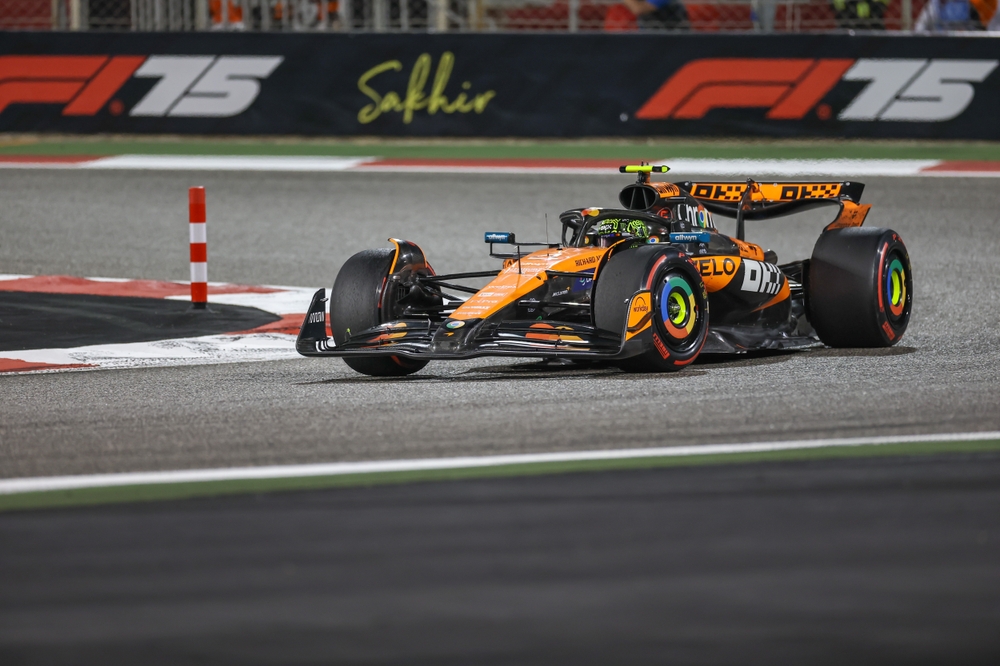
McLaren returned to the front of the timing screens in Barcelona after a difficult Monaco weekend, with Lando Norris setting the fastest lap in the second practice session.
The result suggested that the MCL40 is far better suited to the Spanish circuit’s faster and more open corners. However, the longer runs indicated that McLaren may still have work to do before Sunday’s race.
New front wing appears more effective
McLaren’s revised front wing, which the team chose not to use during the previous two race weekends, appeared to perform more successfully at Barcelona.
Norris said the car had returned to a more familiar level of competitiveness, closer to the pace it had shown in Miami.
The circuit’s wide, flowing layout is very different from the tighter tracks visited recently, making direct comparisons with Monaco and earlier rounds difficult.
Fast despite an imperfect feeling
Norris completed only FP2 after allowing Leonardo Fornaroli to drive his car in the opening session.
Although he topped the times, the British driver reported several problems, including vibrations. He also described the grip as inconsistent because of the heat, tyre behaviour and changing wind.
Even so, Norris considered it encouraging that McLaren could produce competitive lap times without the car feeling particularly comfortable.
Long runs tell a different story
The race simulations were less convincing for McLaren, although differences in fuel levels and tyre compounds make direct comparisons uncertain.
George Russell recorded the fastest average among the leading teams, completing four laps on soft tyres at 1m21.195s.
Mercedes teammate Kimi Antonelli followed with a 1m21.425s average over seven laps. Charles Leclerc was third for Ferrari at 1m21.696s on mediums, ahead of Max Verstappen’s 1m21.818s soft-tyre run.
Norris averaged 1m22.029s across eight laps on softs, while Oscar Piastri posted 1m22.336s over six laps on mediums.
Mercedes shows promising race speed
Russell’s shorter soft-tyre run may have exaggerated the apparent advantage, especially as tyre degradation was visible across every compound.
His nine-lap medium run averaged 1m21.788s. Removing two unusually slow laps at the end improved that figure to 1m21.369s, giving Mercedes confidence in its race pace.
Bradley Lord, Mercedes’ deputy team principal, said the long runs looked close but competitive, particularly for Russell on the medium tyre.
Ferrari upgrade delivers stronger pace
Ferrari also showed encouraging signs with its upgraded car.
Leclerc’s average improved to 1m21.495s when one lap that was significantly slower than the others was removed from the calculation.
Lewis Hamilton had a more difficult Friday and was well down the order in both qualifying and long-run comparisons.
Hamilton described the grip level as possibly the lowest he had experienced at Barcelona during a race weekend and said the tyres appeared to last only one lap at full performance.
Tyre management could decide the race
The unusual tyre behaviour may ultimately keep McLaren in contention despite its weaker long-run averages.
With high temperatures and significant degradation, Sunday’s result could depend less on outright pace and more on which team can preserve its tyres across an entire stint.
Barcelona has traditionally rewarded strong race performance, making tyre life more important than a single fast lap.
Pirelli selects softer compounds
Pirelli has moved one step softer than usual for the Spanish Grand Prix.
The C2 is being used as the hard tyre, the C3 as the medium and the C4 as the soft. The supplier hopes the selection will create more pit stops while also making the hard compound a realistic strategic option.
Verstappen was the only leading driver to complete a representative long run on the hard tyre, averaging 1m21.911s. That performance compared reasonably well with the other race simulations.
Red Bull lacks balance and grip
Red Bull appeared less competitive over one lap, with Verstappen finishing almost nine tenths behind Norris.
The team was closer during the longer runs, but chief engineer Paul Monaghan acknowledged that the car was short of both balance and grip.
He noted that the hot and demanding conditions were likely creating similar problems for every team. The decisive factor would be how much lap time each car loses while dealing with those limitations.
McLaren’s headline pace needs confirmation
Norris’s FP2 result confirmed that Barcelona suits McLaren better than Monaco, and the revised front wing appears to have improved the car.
However, Mercedes and Ferrari looked stronger during sustained running, while Red Bull remained competitive enough to stay involved through strategy and tyre management.
McLaren may have recovered its qualifying speed, but the team still needs to improve its balance and long-run performance if it wants to convert Friday’s headline result into victory on Sunday.