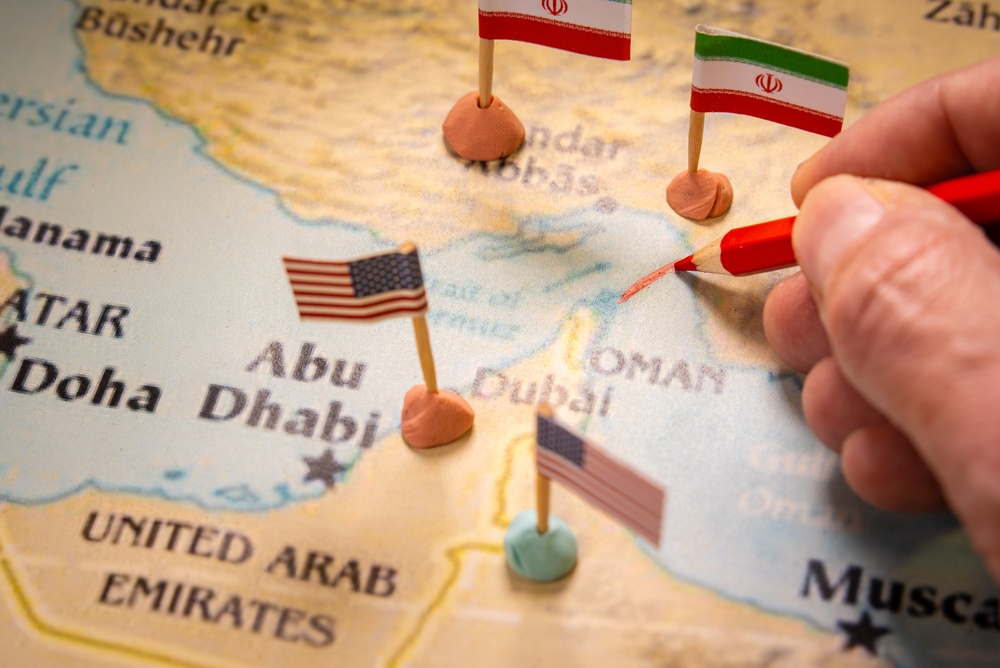
Iran said Thursday that it is in the final stages of drafting an agreement with Oman regarding the Strait of Hormuz, while tensions continued across the wider Middle East with the deaths of two Israeli soldiers in Lebanon and renewed fighting involving Yemen’s Houthi rebels.
Iran says Strait of Hormuz agreement is close
Iran’s Foreign Ministry spokesperson Esmail Baghaei said a potential agreement with Oman over the Strait of Hormuz is in the “final stage” of drafting. He added that a joint statement would be released if outside parties do not interfere with the process, in an apparent reference to the United States.
The agreement is expected to depend on whether the U.S. lifts restrictions affecting Iranian ports. A U.S. official said Thursday that any temporary shipping routes through the Strait of Hormuz would not include obstacles such as approvals, permissions, tolls or additional charges.
U.S. President Donald Trump said he would not confirm whether a deal had been reached to reopen the waterway, saying the strait was already “sort of open right now.”
The Strait of Hormuz remains a critical route for global energy supplies. Before the conflict began with U.S. and Israeli strikes on Iran in February, around one-fifth of the world’s traded oil and natural gas passed through the waterway at the entrance of the Persian Gulf.
Shipping activity remains below normal levels
At least two ships were hit in the Strait of Hormuz over the past week, while several others reported near misses or warnings from groups claiming to represent Iran’s Revolutionary Guard, according to maritime data company Lloyd’s List Intelligence.
Meanwhile, Yemen’s Iran-backed Houthi rebels continued to claim attacks on vessels in the Red Sea, although those claims could not be independently verified.
Ship traffic through the Strait of Hormuz increased to 84 transits between July 27 and August 2, up from 45 the previous week. However, activity remains significantly below the more than 700 weekly transits recorded before the crisis.
Houthis launch major attack in Yemen
Yemen’s Houthi rebels attacked government forces in two provinces, killing at least 30 troops and injuring 50 others, according to government officials.
The attacks represent a significant escalation since a 2022 truce largely reduced fighting between the Iran-backed Houthis and forces supporting Yemen’s internationally recognized government.
The conflict in Yemen began in 2014 when the Houthis captured the capital, Sanaa, and expanded control over much of northern Yemen. A Saudi-led coalition intervened the following year.
Israeli soldiers killed in Lebanon
Two Israeli soldiers were killed and four others seriously wounded in an explosion in southern Lebanon, according to the Israeli military.
The deaths mark the first Israeli military fatalities since a fragile ceasefire was implemented in June between Israel and Hezbollah, the Iran-backed Lebanese militant group.
Israel launched strikes in southern Lebanon on Wednesday, saying Hezbollah had violated the ceasefire agreement. The military also issued evacuation warnings for another village, marking the first such warning in several weeks.
The escalation occurred as Lebanese and Israeli negotiators met in Rome to discuss implementation of the June agreement, which requires Israeli forces to withdraw from areas they occupy in southern Lebanon in exchange for Hezbollah disarmament.
Uganda approves Gaza stabilization force deployment
Ugandan lawmakers approved the deployment of troops to participate in the proposed International Stabilization Force for Gaza.
The 20,000-member force was proposed by U.S. President Donald Trump’s Board of Peace in February with the goal of supporting stability and reconstruction in Gaza, although the force has not yet been formed.
Other countries, including Morocco, Kazakhstan, Kosovo, Albania and Indonesia, have previously expressed support for the mission. Indonesia has since placed its troop commitment on hold indefinitely.
The Gaza ceasefire remains stalled after Israeli Prime Minister Benjamin Netanyahu said Israel would not withdraw from current positions until Hamas fully disarms.
Israeli settler charged over West Bank killing
Israeli prosecutors charged a settler over the killing of Palestinian activist Awdah Hathaleen in the occupied West Bank last year.
Yinon Levi faces charges including reckless manslaughter, armed trespassing and malicious property damage. The manslaughter charge carries a lesser penalty than murder under Israeli law.
Human rights group B’Tselem said the indictment is the first since the October 7, 2023 Hamas attack in which an Israeli citizen has been charged over the death of a Palestinian in the West Bank.
Iraq moves against armed militias
Iraq announced that armed activity outside government authority after September 30 will be prosecuted under the country’s Anti-Terrorism Law.
The move is part of a broader effort to bring all weapons under state control. Several powerful Iran-backed armed groups have rejected calls to surrender weapons or dissolve their organizations.
The announcement follows recent strikes by Saudi Arabia and the United States against Iraqi militia positions after Riyadh accused Iraqi armed groups of using drones to target oil facilities.