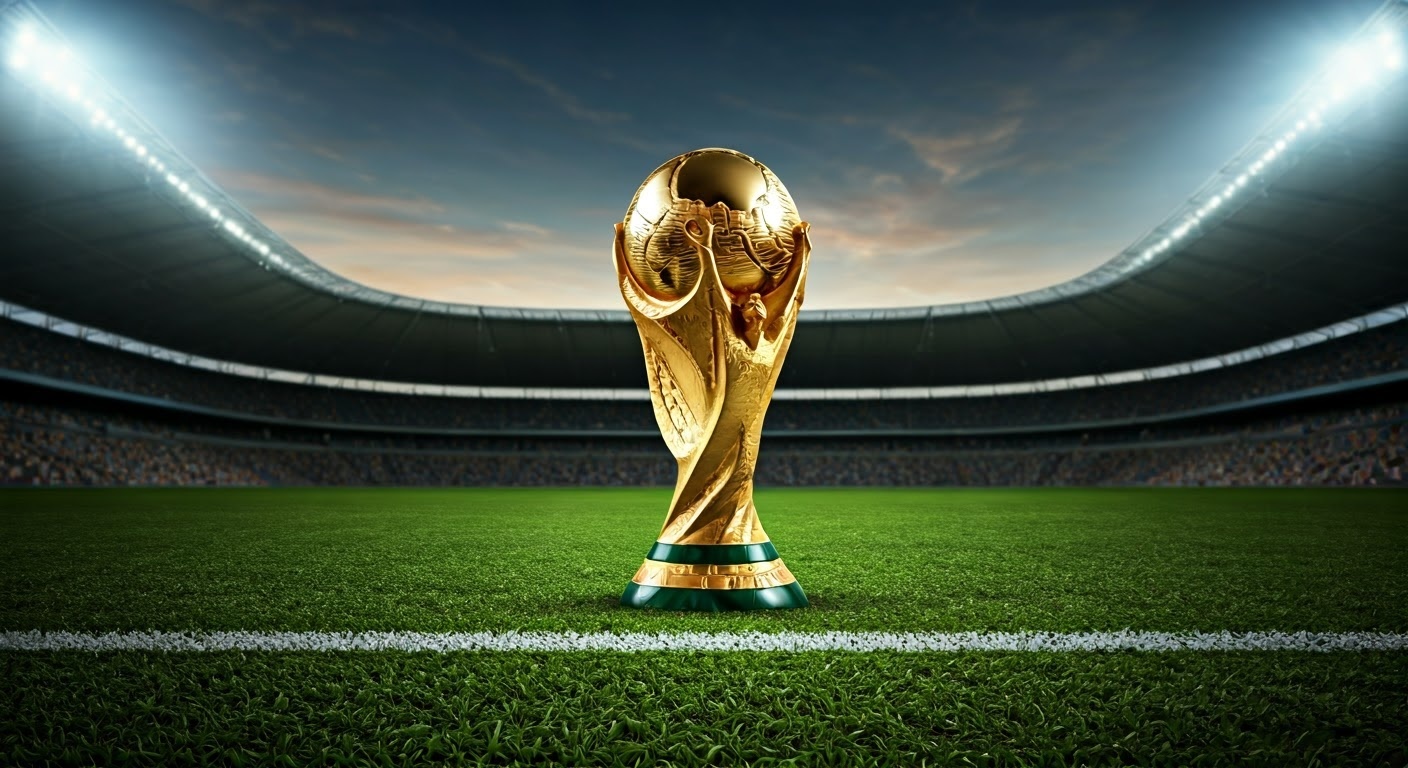
World Cup Updates Continue Across Three Hosts
The World Cup news cycle continues around the clock as matches, controversies and off-field stories unfold across the United States, Canada and Mexico, with the tournament building toward the final in New York on Sunday, July 19.
Argentina Players Receive Support at Home
In Buenos Aires, several locals voiced support for Argentina players who displayed a banner claiming sovereignty over the Falkland Islands after the team’s semi-final win against England.
Banner Appears After England Victory
After Argentina’s 2-1 victory over England in Atlanta, some players were seen with a banner reading “Las Malvinas Son Argentinas”, meaning “The Falklands are Argentine”.
How the Banner Reached the Players
A Reuters photograph showed the white, homemade-looking banner first being waved by fans in the front row of the stadium. Argentine newspaper Clarin reported that midfielder Giovani Lo Celso approached the supporters and asked to borrow it.
Lo Celso and Martinez Hold It Up
Later images showed Lo Celso holding the banner alongside centre-back Lisandro Martinez while Argentina’s players sang and celebrated in front of their supporters. The banner was later seen lying on the grass.
Fifa Rules Put the Gesture Under Review
The incident has drawn attention because Fifa’s Stadium Code of Conduct prohibits banners, flags, clothing and other items considered political, offensive or discriminatory inside stadiums.
Britain Urges Fifa to Investigate
Britain has called on Fifa to look into the episode. The dispute carries historic weight because Argentina and the United Kingdom fought a short war over the islands in 1982, in which 649 Argentine soldiers and 255 British combatants died.
Buenos Aires Locals Defend the Players
Near a monument to Argentine war dead in central Buenos Aires, people asked about the incident expressed support for the players. Many viewed the gesture as meaningful because of the sensitivity of the issue in Argentina.
Public Figures and National Memory
Martin Aguirre, 30, said it was important for players, as public figures, to express themselves on issues that matter deeply to Argentines. He said the gestures by Lisandro Martinez and Giovani Lo Celso were appreciated even if they could lead to sanctions or other consequences.
Supporters Reject Political Label
Federico Schenone, 52, said he did not see the banner as a political act, but as a matter of history and legitimacy. His view reflected a broader sentiment among some Argentines that the Falklands question remains part of national identity.
Messi Points to the Weight of History
Lionel Messi did not directly refer to the banner after the match, but he acknowledged the historical pressure around the game. He said that in a match of such magnitude, many factors come into play and history weighs on the occasion.
Pele Shirt Sells for $4.9 Million
In another World Cup-related story, the shirt worn by Brazil legend Pele when he scored twice in the 1958 World Cup final sold for 4.9 million dollars at auction, according to Sotheby’s.
A Historic Number 10 Jersey
The number 10 shirt was worn by Pele as a 17-year-old when Brazil defeated host nation Sweden 5-2 in Stockholm to win its first World Cup title. The auction house said the item attracted 10 bids from more than five bidders.
Second-Most Expensive Football Shirt
The sale made Pele’s 1958 final shirt the second-most expensive football shirt ever sold at auction. It trails only the shirt worn by Diego Maradona when he scored the “Hand of God” goal for Argentina against England at the 1986 World Cup, which sold for 9.3 million dollars in 2022.
Pele’s Legacy Still Commands Attention
Pele, who died in 2022 at the age of 82, scored twice in the 1958 final and remains the youngest player ever to score in a World Cup final. The same shirt had previously sold at auction in 2004 for 105,600 dollars, according to Sotheby’s.
History Shapes the Tournament Beyond the Pitch
Both stories underline how World Cup moments often reach beyond football itself. Argentina’s banner has reopened political and historical sensitivities, while Pele’s auctioned shirt shows the lasting value of football memory and the enduring global fascination with the sport’s defining figures.